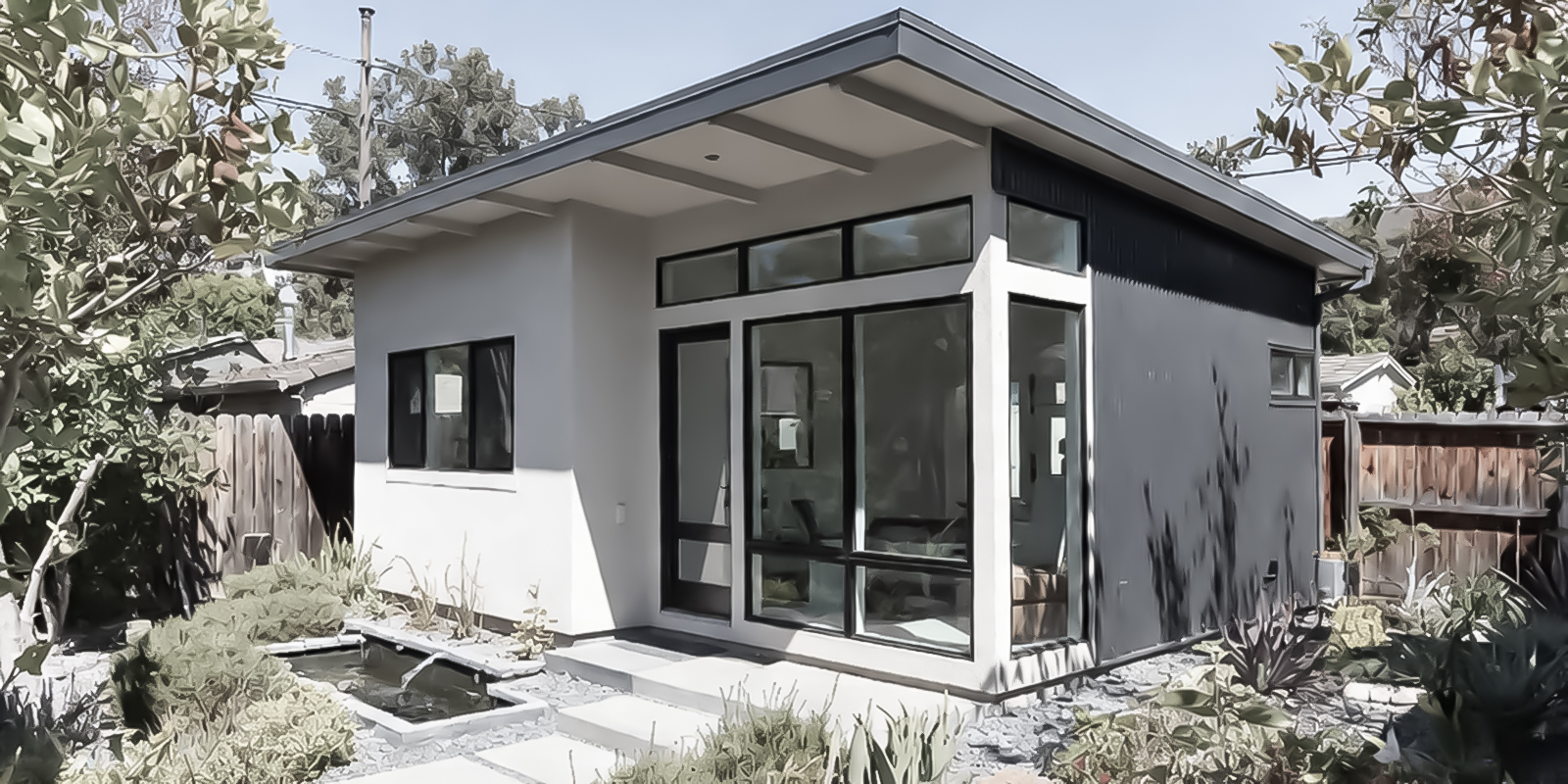
Accessory Dwelling Units: A Growing Opportunity In 2025
Posted Mar 15 2025 | By Admin | Tag(s) Architecture , Lifestyle | Comments 2 Comments
Accessory Dwelling Units: A Growing Opportunity in 2025 and Beyond Accessory dwelling units—affectionately known as ADUs, and sometimes called granny flats, in-law suites, or backyard homes—have surged in popularity across California. In communities along the Central Coast, such as Paso Robles and Santa Maria, homeowners and developers are increasingly turning to these compact secondary residences built on existing single-family lots. What was once a niche architectural concept has evolved into a mainstream solution for addressing housing challenges, boosting property values, and adapting to modern lifestyle needs.
Why ADUs Are Gaining Momentum in California
California continues to grapple with a persistent housing shortage, where new construction has struggled to keep pace with population growth and demand. Statewide, ADUs now account for nearly one in five new housing units permitted, representing a dramatic shift from just a decade ago when they were a tiny fraction of overall production. In 2023 alone, California permitted over 26,900 ADUs, with early indicators suggesting continued growth into 2025 and beyond. On the Central Coast, this trend resonates strongly in areas like San Luis Obispo County, where relaxed state laws have opened the door for up to three ADUs on certain residential properties.
For homeowners, ADUs offer remarkable flexibility. They can function as:
- Rental income generators — providing a steady revenue stream in high-demand rental markets.
- Guest houses — for visiting family and friends.
- Multigenerational housing — allowing aging parents, adult children, or extended relatives to live nearby while preserving independence.
- Home offices or creative studios — in an era of remote work.
In regions with constrained housing supply, such as the Central Coast, ADUs play a quiet but powerful role in expanding local options without the need for large-scale development or significant infrastructure overhauls. They promote infill growth that respects existing neighborhoods while adding much-needed density.
Recent 2025 legislative updates have supercharged this momentum. Key changes effective January 1, 2025, include:
- Streamlined permitting processes, with many cities now required to offer pre-approved ADU plans that can cut approval times dramatically—often to just 30-60 days.
- Greater flexibility for multifamily properties, allowing up to eight detached ADUs in some cases.
- Reduced or eliminated parking requirements for smaller units.
- Easier processes in coastal zones.
- Permanent removal of many owner-occupancy mandates, opening doors for investors.
Cities like Paso Robles have embraced these reforms by launching pre-approved stock plans, lowering fees in certain areas, and simplifying approvals to encourage sustainable growth. These policy shifts remove longstanding barriers, making ADUs more accessible and cost-effective than ever.
The Financial and Practical Benefits
Building an ADU can significantly increase property value—often by tens or even hundreds of thousands of dollars—while generating rental income that helps offset mortgage costs or fund retirement. Construction costs in 2025 typically range from about $100,000–$180,000 for garage conversions to $225,000–$450,000+ for detached units, depending on size, finishes, location, and whether custom or modular construction is chosen (averaging $125–$300+ per square foot). While not inexpensive, many homeowners find the return on investment compelling, especially with potential rental yields and long-term appreciation.
Beyond finances, ADUs support broader societal goals: they provide relatively affordable housing options compared to new single-family homes, foster multigenerational living arrangements that strengthen family bonds, and contribute to more walkable, sustainable communities with lower environmental impact than sprawling suburban development.
The Critical Role of Thoughtful Architectural Design
Architectural excellence is what elevates a basic ADU from a utilitarian add-on to a harmonious extension of the property. Well-designed units seamlessly integrate with the main residence through matching rooflines, materials, colors, and architectural details—ensuring the ADU feels like a natural part of the neighborhood rather than an afterthought.
Key design considerations include:
- Privacy and spatial efficiency — Strategic placement (often set back from the street) maintains privacy for both the primary home and neighbors while maximizing usable yard space.
- Natural light and flow — Open layouts, large windows, and thoughtful orientation create inviting, functional living areas even in smaller footprints (typically 500–1,200 square feet).
- Sustainability features — Increasingly popular in 2025 trends: energy-efficient appliances, solar-ready designs, high-performance insulation, drought-tolerant landscaping, and permeable surfaces for stormwater management.
- Modern aesthetics — Clean lines, modular elements, smart-home integration, and flexible interiors that adapt to changing needs (e.g., convertible spaces for work or guests).
On the Central Coast, designs often draw inspiration from local vernacular—think California ranch, coastal cottage, or Mediterranean influences—to blend respectfully with surrounding homes. Professional architects experienced in local codes can navigate objective design standards, ensuring compliance while delivering beauty and functionality.
Navigating Local Regulations and Permitting
While state law sets a strong framework, local ordinances in cities like Paso Robles and Santa Maria still vary in details such as setbacks, height limits, and development impact fees. This makes partnering with architects and planners deeply familiar with Central Coast requirements essential. They can leverage pre-approved plans, streamline submissions, and anticipate potential challenges—saving time, money, and frustration.
Homeowners should also explore available resources: many municipalities now provide ADU handbooks, online dashboards, and dedicated staff to guide the process. Financing options, including specialized ADU loans and potential incentives or fee reductions, continue to expand.
Looking Ahead: ADUs as a Lasting Solution
As California's housing demands evolve amid economic pressures, demographic shifts, and climate considerations, ADUs stand out as one of the most practical, scalable, and community-friendly architectural solutions. They empower individual homeowners to contribute directly to the housing supply while enhancing their own quality of life and property worth.
On the Central Coast and beyond, the ADU movement is more than a trend—it represents a thoughtful, incremental approach to building better neighborhoods. Whether you're a homeowner dreaming of extra space for family, an investor seeking income opportunities, or simply someone passionate about innovative housing, 2025 marks an ideal time to explore the possibilities.
If you're considering an ADU project in Paso Robles, Santa Maria, or elsewhere on the Central Coast, consulting with local experts early can turn vision into reality. The opportunity is here—smart, sustainable, and ready to grow with our communities.
Disclaimer
GFH Architecture does NOT represent or endorse the accuracy or reliability of any information or content contained on, distributed through or linked, downloaded or accessed on our Blog. The Authors expressed views and opinions are for entertainment, information and discussion purposes only. By viewing our Blog you signify your agreement that you must evaluate and make your own judgement, and bear all risks associated with, the use of any content on our Blog. Site Administrator
-
GFH has over 40 years of architectural experience serving the Central Coast.
-
Contact us today to discover how we can best serve you on your next building project.
-
Tel: +1 (805) 466-7674
-
Email: gary@gfharchitecture.com
John Smith Mar 15 2025
Your approved reply could appear here. Share your opinions and join the conversation.
ReplyJohn Smith Mar 15 2025
Your approved reply could appear here. Share your opinions and join the conversation.
ReplyLeave a Reply