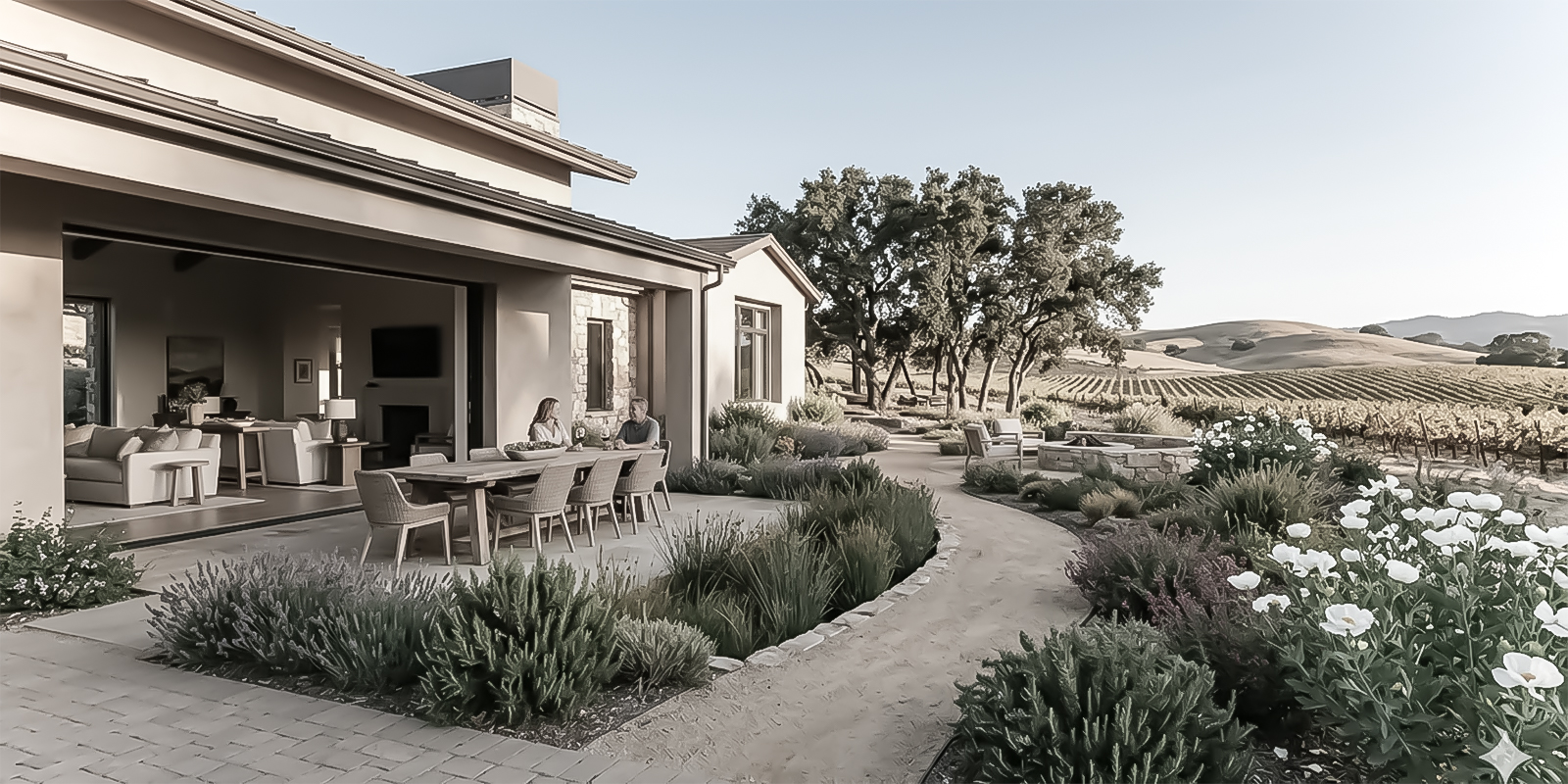
The Role of Landscape Design in Central Coast Architecture
Posted Jul 15 2023 | By Admin | Tag(s) Architecture , Lifestyle | Comments 2 Comments
Creating Harmonious Living Spaces on California’s Central Coast
In the sun-drenched hills and rolling vineyards of California’s Central Coast, architecture and landscape design are not separate disciplines—they are deeply intertwined partners. From the wine country estates of Paso Robles to coastal homes in Cambria and San Luis Obispo, thoughtful landscape design enhances architectural beauty, extends living spaces outdoors, supports environmental sustainability, and creates cohesive environments that feel both timeless and deeply connected to the land.
Why Landscape Matters in Architectural Design
Great architecture doesn’t stop at the building’s walls. The most successful projects treat the surrounding landscape as an essential extension of the structure itself. Landscape architecture softens hard lines, frames views, provides shade and shelter, and guides how people move through and experience a space.
On the Central Coast, this integration is especially important. The region’s Mediterranean climate—mild winters, warm summers, and long dry seasons—demands designs that respect natural conditions rather than fight against them. When architecture and landscape work in harmony, the result is not just a beautiful home or commercial building, but a complete living environment that feels organic to its surroundings.
Native Plants and Drought-Tolerant Gardens: A Central Coast Signature
One of the most visible ways landscapes enhances architecture in areas like Paso Robles is through the use of native and drought-tolerant plants. Instead of thirsty lawns that struggle in the dry summers, homeowners and designers increasingly incorporate California natives such as:
- Matilija poppy
- California fuchsia
- Deer grass
- Lavender
- Rosemary
- Yarrow
These plants require far less water once established, reduce maintenance, and create a soft, naturalistic palette that complements both modern and traditional architectural styles. Their textures, seasonal colors, and movement in the breeze add life and dynamism that no building material alone can provide.
In Paso Robles wine country homes, these gardens often blend seamlessly with the architecture—framing entryways, softening foundation lines, and creating inviting transitions between indoor and outdoor spaces. The result is a home that feels rooted in the landscape rather than imposed upon it.
Extending Living Spaces: Pathways, Patios, and Outdoor Rooms
Today’s Central Coast homeowners expect their yards to function as true extensions of their homes. Landscape design plays a critical role here by creating:
- Generous patios and covered outdoor dining areas
- Meandering pathways made of permeable pavers or decomposed granite
- Seating nooks, fire pits, and shaded gathering spaces
- Outdoor kitchens and lounging zones
These elements blur the boundaries between inside and out, especially valuable in a climate where people can comfortably enjoy the outdoors for much of the year. Clean-lined modern hardscapes paired with soft plantings create striking contrasts, while Mediterranean-inspired plazas with vines and potted olives nod to the region’s wine country heritage.
Large windows, sliding glass doors, and strategic placement of trees and shrubs ensure that architectural views are framed beautifully and that natural light floods interior spaces.
Environmental Benefits: Managing Water and Reducing Impact
Beyond aesthetics, landscape architecture on the Central Coast serves vital environmental functions. With California’s ongoing focus on water conservation, well-designed landscapes help manage stormwater runoff, recharge groundwater, and minimize a property’s ecological footprint.
Techniques such as:
- Bioswales and rain gardens
- Permeable hardscaping
- Efficient drip irrigation systems
- Mulching and soil improvement
All work together to slow, sink, and store water naturally. These strategies not only comply with local water-efficiency guidelines (such as those in Paso Robles) but also lower long-term water bills and reduce strain on municipal resources.
Native plant palettes further support local biodiversity by providing habitat for pollinators, birds, and beneficial insects—turning private gardens into small contributions to the region’s ecological health.
A Cohesive Vision: Architecture and Landscape as One
When architecture and landscape are designed collaboratively from the beginning, the whole property becomes greater than the sum of its parts. The building feels anchored in its site. Outdoor spaces feel intentional and welcoming. Maintenance becomes easier. And the overall sense of place is profoundly enhanced.
Local landscape architects and designers on the Central Coast excel at this holistic approach. They consider soil conditions, microclimates, viewsheds, and the architectural style—whether it’s contemporary minimalism, rustic Mediterranean, or something in between—to craft solutions that are both beautiful and practical.
Final Thoughts
On California’s Central Coast, landscape is far more than decoration. It is an essential component of thoughtful architecture—one that responds to our unique climate, celebrates native beauty, extends how we live, and protects the environment for future generations.
Whether you’re building a new home in Paso Robles, remodeling a property in Templeton, or enhancing a commercial space, investing in integrated landscape design pays dividends in beauty, livability, sustainability, and property value.
If you’re dreaming of an outdoor space that truly complements your architecture, working with professionals who understand the Central Coast’s distinctive character can help turn that vision into reality.
Want to learn more about GFH Architecture, Planning & Graphics?
Disclaimer
GFH Architecture does NOT represent or endorse the accuracy or reliability of any information or content contained on, distributed through or linked, downloaded or accessed on our Blog. The Authors expressed views and opinions are for entertainment, information and discussion purposes only. By viewing our Blog you signify your agreement that you must evaluate and make your own judgement, and bear all risks associated with, the use of any content on our Blog. Site Administrator
-
GFH has over 40 years of architectural experience serving the Central Coast.
-
Contact us today to discover how we can best serve you on your next building project.
-
Tel: +1 (805) 466-7674
-
Email: gary@gfharchitecture.com
John Smith Jul 15 2023
Your approved reply could appear here. Share your opinions and join the conversation.
ReplyJohn Smith Jul 15 2023
Your approved reply could appear here. Share your opinions and join the conversation.
ReplyLeave a Reply